Miami has steady moving and cleanout activity, but it is also a competitive, regulated market. If you are researching a moving junk removal franchise Miami has to offer, the smart move is to study the business model, the local rules, and the Franchise Disclosure Document (FDD) before you decide anything. This article walks through what drives demand in Miami-Dade, how a two-service franchise works, what support Varsity Boys Moving Franchises describes, which licenses apply, and what to check before you invest. It is written to help you ask better questions, not to make promises. Let’s start with the Miami market itself.
Why Is Miami Worth Considering for a Moving and Junk Removal Franchise?
Miami is a market to evaluate, not a guaranteed win. It has a large, mobile population, a lot of apartments and condos, and plenty of competition. A moving franchise in Miami works only if the local numbers, your territory, and your own capacity to run a team line up. Here is what the public data says.
What Drives Moving and Cleanout Demand in Miami-Dade?
Census QuickFacts shows 975,411 households in Miami-Dade County for 2020–2024, and 88.0% of people lived in the same house a year earlier. Put differently, roughly one in eight residents changed address in a single year. That last line is our reading of the data, not a figure the Census publishes.
Every one of those address changes is a potential job. Miami-Dade also has a large share of apartment and condo housing, which tends to produce frequent move-outs, downsizing, and leftover furniture that needs to be hauled away. Moves and cleanouts often happen on the same day, which is why pairing the two services makes sense on paper.
A caution: demand is not automatic. Turning address changes into booked jobs depends on marketing, reviews, crew quality, and pricing, and it is not something any franchise can guarantee.
What Does the Latest Population Data Really Say?
The picture is mixed, and you should see both sides.
Census estimates show Miami-Dade lost 10,115 residents between July 2024 and July 2025. Data from the Shimberg Center points to a net domestic migration loss of 72,254 people, partly offset by about 54,200 net international arrivals. An October 2026 Atlanta Fed report found that 60% of middle-income renter households in the metro area spend more than 30% of their income on housing.
What does that mean for a moving and junk removal business? People moving out, moving in and downsizing all create moving and cleanout work. But a shrinking headcount also means more competition for each job, and housing pressure can push customers to shop on price. Treat the data as a reason to research carefully, not as a green light or a red flag.
So what does the franchise actually do?
How Does a Moving and Junk Removal Franchise Work?
A moving and junk removal franchise lets you operate under an established brand and system rather than building every process yourself. You run a local business that serves households and companies who need things moved or hauled away. The details of the system, the fees, and the obligations on both sides are set out in the FDD, which is the only document that controls the terms.
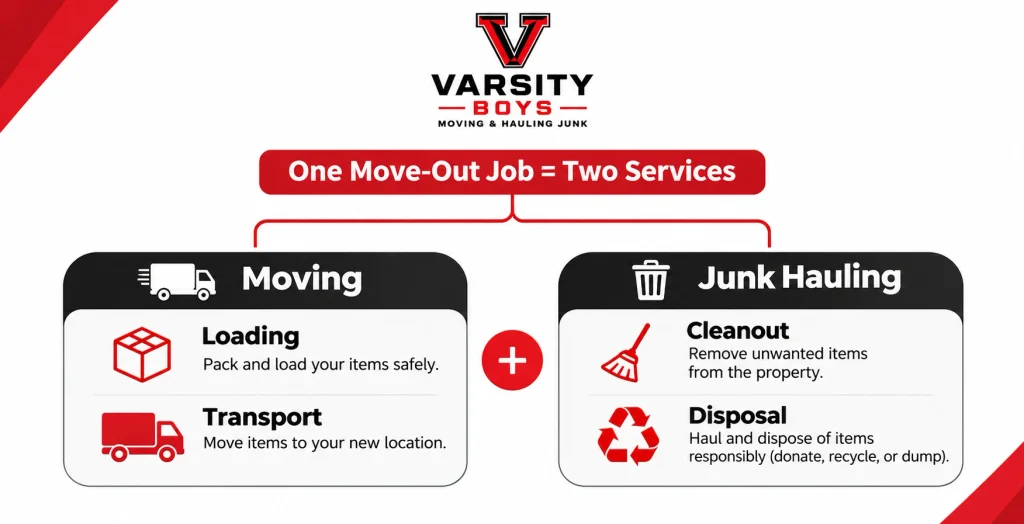
Two Services Under One Brand
The model combines moving with junk removal for residential and commercial customers. A junk removal franchise Miami customer can call might pick up an old couch, clear a garage, or haul away construction debris. The moving side covers local moves, whether that is a family relocating across town or an office shifting suites.
Here is one plain example of each. A residential moving job might be a two-bedroom apartment moved to a new building across Miami-Dade. A junk removal job might be a one-time cleanout of a storage unit.
What Does the Owner Do, and What Does the Crew Do?
The owner runs the business and the team. That typically means scheduling, hiring, customer relationships, local marketing, and quality control. The crew does the hands-on loading, moving, and hauling.
Current franchise information indicates new owners can start without buying a truck or opening a storefront, subject to company standards and applicable law. Confirm exact startup requirements in the FDD. Do not assume the role is hands-off, and do not assume prior experience is or is not required until the franchise team tells you directly.
How Moving and Junk Removal Work on the Same Job
Here is a hypothetical example, offered only as an illustration. A customer is moving out of a condo and needs boxes and furniture transported to a new place. They also have a few unwanted items left behind. One brand can handle the move and haul the leftovers, so the customer deals with a single call instead of two.
Here is what support looks like.
What Support Does Varsity Boys Moving Franchises Offer?
Support is where a franchise is supposed to earn its fee, so it deserves careful questions. The points below reflect third-party franchise directories, so each should be confirmed with the company and in the FDD.
Training and Opening Assistance
According to current franchise information, new owners receive about five days of initial training in San Antonio, up to two days of on-site opening assistance and operating manuals. The home office is described as being in San Antonio.
Ask the franchise team what a training day actually covers, who delivers it and what happens after the initial period ends. Ask what the opening assistance looks like in a market like Miami and whether any of it is optional. A short list of training topics is no substitute for talking with current owners about how useful it was.
Call Center, Marketing, and Ongoing Support
According to current franchise information, the system includes centralized call center support. Ask the franchise team to describe how calls are routed, how leads reach your territory, and what you will be expected to do once a lead arrives. Also ask what marketing guidance, hiring and training help and ongoing coaching are included, and which of those come with additional costs. Whatever they tell you should match what appears in the FDD.
Want to See How the Varsity Boys Model Is Set Up?
If you would like to look at the model in more detail, you can explore the franchise opportunity and see how the system is described by the company directly.
What Licenses and Rules Apply in Miami-Dade?
This is the part many franchise pages skip. Rules apply to both halves of the business, and they vary by city and by service. The franchisee is responsible for compliance, so treat this section as a starting point for conversations with your own attorney, not as legal advice.
Moving Company Registration and Insurance
Florida intrastate movers must register with the Florida Department of Agriculture and Consumer Services (FDACS) and comply with Chapter 507 of the Florida Statutes. Registration must be completed before you begin operating as a mover, and required insurance must be in place. Miami-Dade County also publishes its own mover registration application. Have a franchise attorney confirm exactly what applies to your business.
Junk Hauling Permits and Business Tax Receipts
Miami-Dade requires a local business tax receipt for each place of business, and a municipality may require its own. The county also runs a small hauler permit program with annual fees. Check the Miami-Dade Tax Collector and Solid Waste pages for current requirements for the Miami-Dade Tax Collector. We have left fees out on purpose because they change.
The franchisee is responsible for meeting licensing, insurance, and legal requirements. Get legal advice before you begin.
Franchise vs Starting Your Own Moving or Junk Business in Miami
Is a moving business franchise better than starting from scratch? It depends on what you value. Independents have real advantages, and some Miami operators even market themselves as locally owned businesses with no franchise overhead. Full control over pricing, branding, and operations is a genuine benefit, and it is worth taking seriously.
A franchise trades some of that independence for a system. Here is a simple comparison:
| Franchise | Independent | |
| Brand and systems | Established name and documented processes, subject to the franchise agreement | You build the brand and every process yourself. |
| Training | Structured training provided by the franchisor | Self-taught, or learned on the job |
| Speed of launch | Can be faster, since systems and support exist | Often slower, since everything starts from zero |
| Independence and flexibility | Operate within franchise rules | Full control over decisions |
Neither route is automatically better. A franchise is only worth it if the support described in the FDD matches what you will actually receive. Who tends to do well here?
Is This Franchise a Good Fit for You?
The people who tend to fit this kind of business are comfortable managing people and schedules, pay attention to their local market, and are willing to follow a system rather than reinvent it. If you prefer to make every operational decision yourself, an independent business may suit you better.
Challenges to Plan For
Be realistic. Hiring and keeping reliable crews can be difficult, and the work is physically demanding. Demand can be seasonal, and hurricane season can disrupt schedules. Insurance and permits add cost and paperwork, and Miami is crowded with competitors. Even franchisors in this industry acknowledge that moving demand can swing from one year to the next. If a plan looks easy in every scenario, be skeptical.
What Should You Check in the FDD Before You Decide?
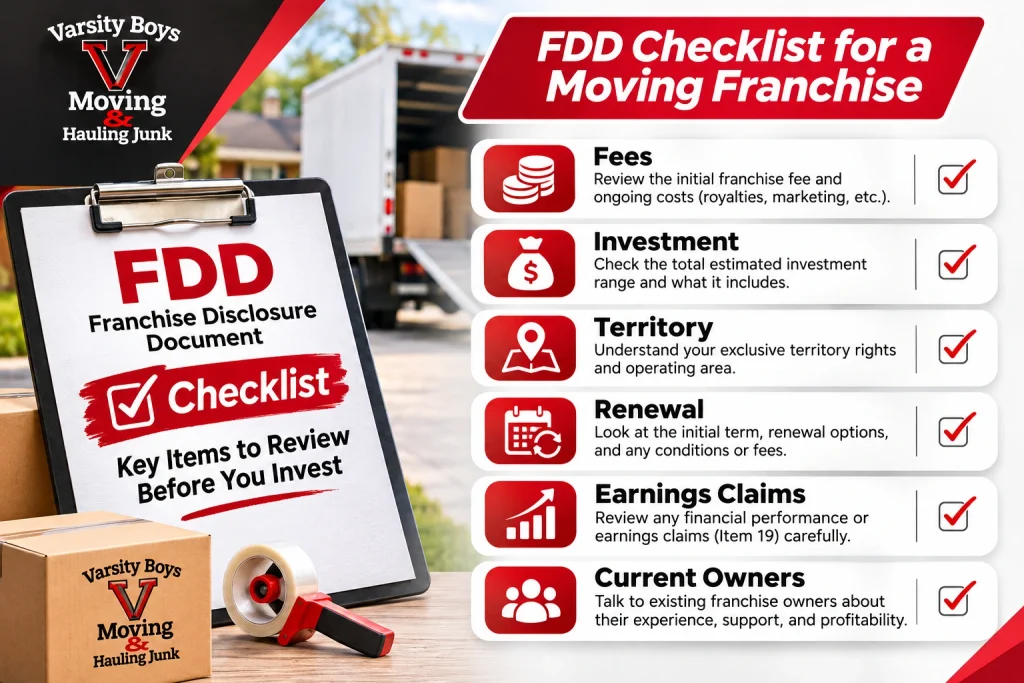
Under the FTC Franchise Rule, a franchisor must give you the FDD at least 14 calendar days before you sign a binding agreement or pay any money. If the agreement is materially changed after that, a further seven-day review period applies. Use the time. Read every item, and do not rely on anything other than the FDD for the actual terms.
Questions to Ask the Franchise Team
Work through these items with your attorney and accountant:
- Items 5, 6, and 7: fees and the estimated initial investment. These are where cost information lives.
- Item 11: what the franchisor must provide, including training and support.
- Item 12: your franchise territory, including whether Miami is available.
- Item 17: renewal, termination, and transfer.
- Item 19: financial performance representations. This item is optional, and where it is absent, earnings claims should not be made to you.
- Item 20: outlet counts and former franchisees.
- Item 21: the franchisor’s financial statements.
Then talk with current owners. Ask what they would do differently, how long it took them to feel established, and whether the support matched what they were told before they signed. Hire a franchise attorney and an accountant before committing.
How Do You Take the Next Step in Miami?
If you want to keep exploring, a typical path looks like this: request information, talk with the franchise team, receive the FDD, validate what you learned with current owners and your advisors, then decide. If you are curious about other markets, you can also see other available franchise areas.
Frequently Asked Questions
Do I need moving or junk removal experience to own this franchise?
The franchise team is the right source for what prior experience, if any, is expected. Per current franchise information, new owners receive initial training, but you should ask exactly what it covers and read Item 11 of the FDD. Do not assume experience is or is not required until the company confirms it.
Do I need to buy a truck or open a storefront?
According to current franchise information, owners can start without buying a truck or opening a storefront, subject to company standards and applicable law. Confirm the actual startup requirements with the franchise team and in the FDD.
How much does a moving and junk removal franchise cost?
The franchise fee, ongoing fees, and estimated initial investment are disclosed in Items 5, 6 and 7 of the FDD. Figures vary across third-party directories, so rely only on the current FDD rather than on any number you see online.
How much can a moving franchise owner earn?
Earnings depend on many factors, and no one can promise a result. If a franchisor chooses to provide financial performance information, it appears in Item 19, which is optional. If there is no Item 19, you should not be given earnings claims. Ask current owners about their own experience.
Is a Miami territory available, and can I own more than one?
Territory is covered in Item 12 of the FDD, and availability is confirmed directly with the franchise team. Do not assume any territory is open until you have confirmed it in writing.
What happens if the franchise does not work out?
Item 17 of the FDD covers renewal, termination, and transfer. Have a franchise attorney review those terms before signing so you understand your options.
Is a Miami Moving and Junk Removal Franchise Right for You?
Miami offers real moving and cleanout activity, but it comes with competition, local licensing, and a population picture that cuts both ways. A moving and junk removal franchise can give you a system and support if you read the FDD closely, talk to current owners, and make sure the terms fit your goals. Take your time, bring in an attorney and accountant, and decide from the documents rather than the marketing.
Ready to Talk About a Miami Territory?
If you would like to learn more, you can explore Varsity Boys Moving Franchises in Miami.